The most common areas affected by HAE attacks
While HAE attacks can cause swelling anywhere in the body, the most common locations include:
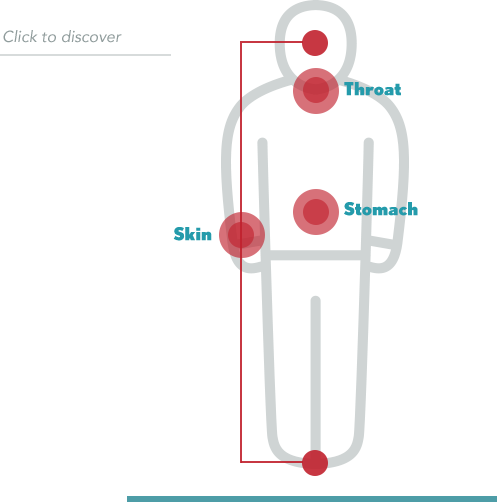
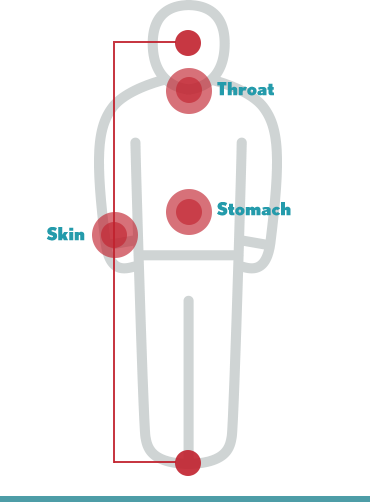
TIP: HAE attacks may affect multiple parts of the body at the same time.

!
Attacks that affect the throat can be life threatening due to the risk of suffocation. Be sure to seek immediate medical attention at the first sign of an attack affecting the throat.

THROAT
(including larynx [voice box], nasal passage, sinus cavities, and tongue)
Throat, or laryngeal, attacks of HAE are less common than skin or stomach attacks, but are the most dangerous, since laryngeal, nasal, tongue, and sinus swelling can shrink the airways and lead to suffocation.
Some of the symptoms of throat swelling include:
- Hoarse voice
- Difficulty swallowing
- Feeling of tightness
- Voice changes
HAE is responsible for 15,000 to 30,000 emergency department visits per year in the US.

SKIN
(including face, hands, feet, and genitals)
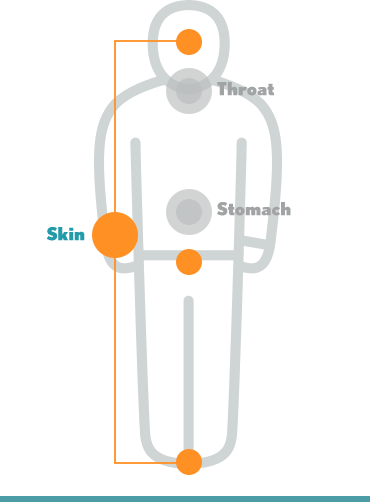
Skin, or subcutaneous, attacks are those that affect the face, hands, feet, or genitals. These attacks can be accompanied by redness and pain, but the areas affected usually do not itch. Itching can be a sign the swelling is due to an allergic reaction, and not HAE.
Attacks that affect the skin can range from uncomfortable to extremely painful, specifically when swelling involves the hands and feet.


HAE is often misdiagnosed because symptoms mimic those of several common conditions, leading to unnecessary abdominal surgeries and mistreatment.

STOMACH
HAE-related attacks in the stomach, or abdominal area, can cause very severe pain and be accompanied by nausea, vomiting, and/or diarrhea. If nausea occurs, it can start hours before a full-blown attack.
During an attack, the abdomen is usually tender to the touch, making it difficult to distinguish from other medical emergencies, such as appendicitis or bowel rupture. Unlike those, however, symptoms from an HAE attack usually subside within several days, even if the attack goes untreated.

What are your symptoms saying?
Answer 8 quick questions to see if your symptoms fit the profile of HAE
Recognizing the warning signs of an attack
HAE attacks can occur suddenly and without warning. However, many people with HAE notice symptoms at the very early stages of an attack, occurring anywhere from minutes to days before the full attack begins. Symptoms that could warn an attack is coming include:
- Sudden mood change
- Irritability or aggressiveness
- Anxiety
- Extreme fatigue
- Rash or tingling sensation of the skin where the swelling begins
- Nausea
Help your doctor determine if it’s HAE
Because HAE is genetic, sharing your family history with your doctor is especially important. Complete the Doctor Discussion Guide to give your doctor the information he/she needs to make a correct diagnosis so you can get proper care.
Complete the Doctor Discussion GuideManaging HAE
Find out more about treatments that can help prevent attacks and ones that can treat attacks as they occur.
Learn about treatments